
MES Production Execution Management System
MES Production Execution Management System provides you with [Shanghai Xiaoding Mechanical Equipment Co., Ltd.] detailed parameters, real-time quotations, price trends, high-quality commodity wholesale/supply information. Selected [{3}] information, providing [{4}] high-quality services, including manufacturer information, product introduction, pictures, quotations, supply and demand information, etc.
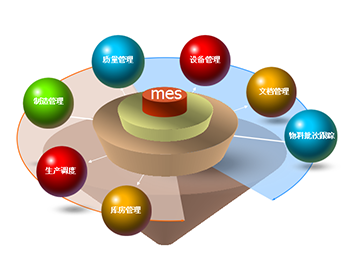
In the operation and management of manufacturing enterprises, workshop production management is an important link for enterprises to achieve scientific management of production plans and effective control of production costs. Without scientific and effective workshop production management, enterprises cannot carry out production systematically, coordinatedly, and orderly. The MES Manufacturing Execution Management System helps users use information technology to build a fast, flexible, and refined manufacturing site operation command and control environment, effectively solve the problems existing in the production site management of manufacturing enterprises, better control production costs, improve production efficiency, increase production plan control capabilities, and enhance the comprehensive competitiveness of enterprise production.
MES transforms plant-level production plans and other information into workshop-level production scheduling plans based on the product and production organization information provided by the Product Design System (PDM) and Enterprise Resource Planning System (ERP), and refines the plans to workstations. Based on real-time data such as equipment, personnel, and materials provided by the underlying control system, it analyzes, calculates, and processes, while optimizing the scheduling plan of workshop-level production factors, it feeds back relevant data to the ERP system, providing a basis for optimizing the ERP system. MES can conveniently, reliably, and efficiently connect the PDM and ERP systems with the underlying control system, building a bridge between the planning management layer and the underlying control layer, filling the information gap between the two, enabling two-way flow of various information within the enterprise, and greatly enhancing the execution capability of the enterprise.
MES is mainly oriented to workshop management of manufacturing enterprises, and its products include twelve modules: Basic Data Management, Workshop Plan Management, Team Operation Management, Workshop Cost Management, Workshop Labor Management, Workshop Material Management, Workshop Quality Management, Manufacturing Resource Management, Capacity Balance Management, Auxiliary Decision Management, On-site Data Collection, and System Configuration Management.
[System Functions]
Basic Data Management: Maintain and manage basic data such as product XBOM data, manufacturing processes, plant calendars, and personnel information involved in the MES system, and achieve integration with the PDM system.
Workshop Plan Management: Combine the workshop's in-process task status, decompose the workshop plan into assignment plans for each section's tasks. According to the workshop production plan and the specific situation of the material inventory, extract the workshop shortage list.
Workshop Cost Management: Complete workshop cost accounting and account table processing, calculate and summarize the actual production cost and manufacturing cost for each task and product batch.
Workshop Labor Management: Provide support for batch and single-piece receipt and dispatch of workshop materials, realize the management function of various types of workshop material resources (blanks, semi-finished products, finished products).
Workshop Quality Management: Generate quality reports and quality data analysis reports based on various collected data on the production site, analyze the data of key processes and key points to discover hidden quality problems in workshop production.
Manufacturing Resource Management: Manage manufacturing resources such as workshop equipment load, equipment maintenance plans, spare parts, tooling and measuring instruments.
Capacity Balance Management: Check the feasibility of executing the production operation plan in the workshop, help production planners coordinate the relationship between capacity demand and available capacity, and analyze the data of key processes and key points.
Auxiliary Decision Management: Provide comprehensive analysis of workshop plan execution, section operation status, materials, quality, labor, cost, and equipment conditions, providing reliable quantitative data for workshop-level management and decision-making.
On-site Data Collection: Collect data from the manufacturing site, including production progress, quality data, equipment load status, personnel working status, in-process product processing status, etc., to provide on-site data for other functional modules.
System Configuration Management: System initialization and user authority management functions.